





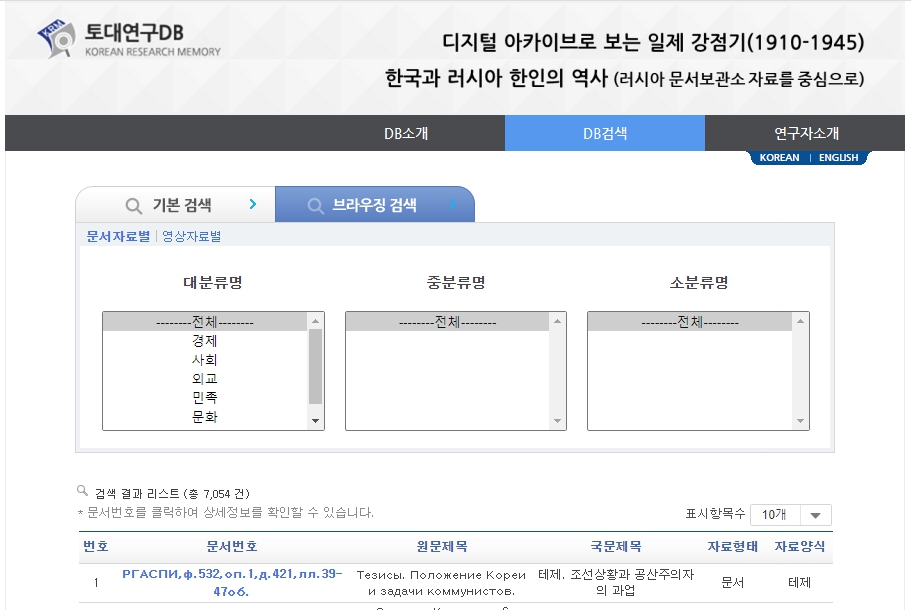
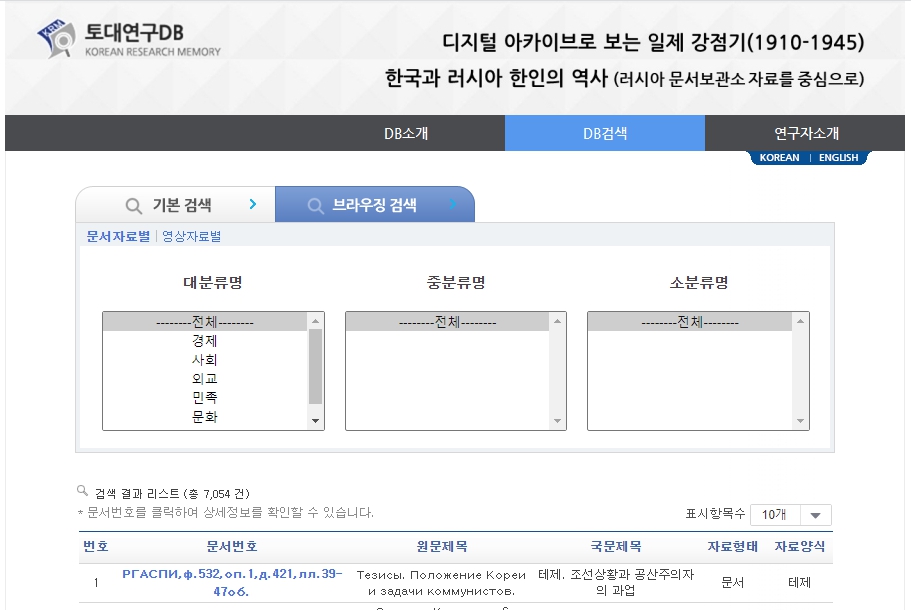
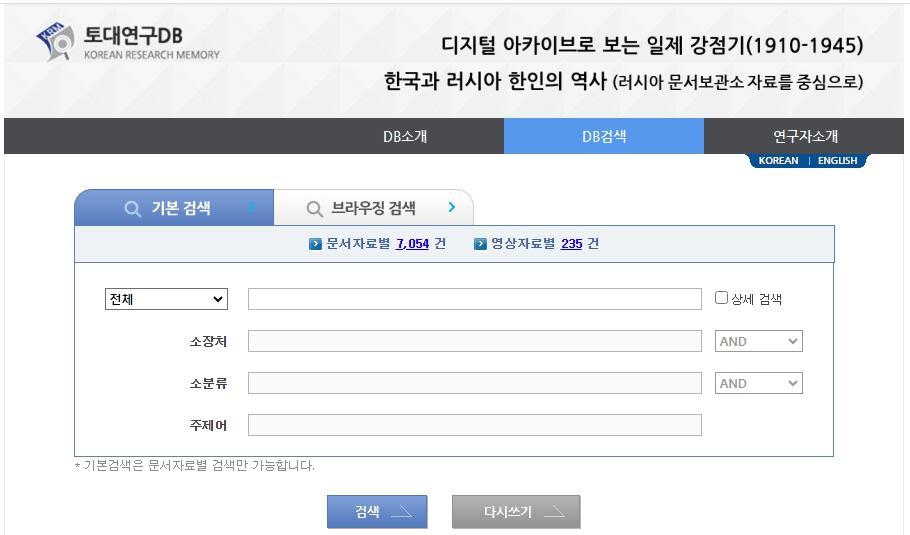
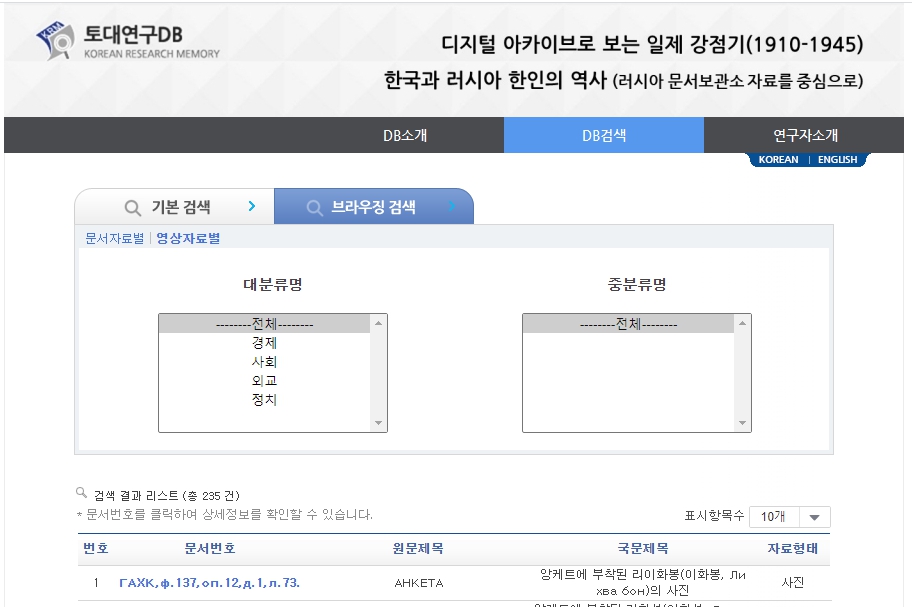
 데이터베이스 소개
일제강점기(1910-1945) 동안 한국과 러시아(소련) 그리고 일본은 전쟁, 혁명, 식민지배, 항일운동 등으로 인해 격동의 시간을 공유했다. 당시 일본제국주의 정부의 사회경제적 수탈, 그리고 한민족 말살 시도에 저항해 우리 선조들은 한반도를 넘어 극동러시아 지역에서 활발한 항일운동을 펼쳤으며, 이 시기 러시아(소련)에서 발생한 다양한 역사적 사건에 때로는 적극적 행위자로, 때로는 소극적 참여자 및 피해자로 연루되었다. 극동러시아 한인들은 1917년 러시아혁명 운동에 참가했고, 1920년대에는 항일무장활동에 참여하기도 했다. 1930년대에는 농민으로, 산업노동자로 농업집단화, 산업화에 참여했고 30년대 중후반에는 스탈린 대숙청의 희생자가 되었고 중앙아시아로의 강제이주 대상자가 되기도 했다. 제2차 세계대전 동안 소련 한인들은 노동자로 그리고 드물게는 군인으로서 전후방에서 소련 시민의 의무를 수행했다. 이 시기 소련은 한반도를 식민화하고 극동지역으로 지배영역 확장을 노리고 있던 일본을 예의 주시하였고 그 과정에서 소련 정부, 군사, 사회 기관 등은 한인 및 한반도와 관련된 많은 정보를 수집하고 기록을 남기고 관련 정보를 보관해왔다. 비록 소련이 해체되고 문서보관소가 일반인들에게 공개되기 시작한 1990년대 초 이래 많은 한국 연구자들이 러시아문서보관소 자료를 입수해왔지만 자료의 체계적 정리가 되어 있지 않아 자료 활용에 많은 문제점을 지니고 있었다. 이러한 문제를 개선하기 위해 본 연구단은 러시아문서보관소 자료의 데이터베이스(DB)화를 수행했다.
기대효과/활용방안
본 연구단의 DB결과물은 다음과 같은 학문적, 사회적, 교육적 기대효과/활용방안을 지닌다. ? 정확성과 신뢰성을 토대로 한 자료 접근성 확보 러시아에서 발굴하고 수집한 자료와 기축적된 일제강점기 한국 자료를 해당 분야 전문가들이 번역과 주해 작업을 한 자료를 DB화함으로써 원하는 자료에 대한 접근성을 배가 시킬 것이다. ? 학술연구자료 허브 구축에 기여 본 연구단이 구축한 DB자료는 기초학문자료센터 및 타기관이 지속적으로 참조하고 활용할 것이며 궁극적으로 학술연구자료의 허브 형성에 기여할 것이다. ③ 일제강점기 한국 관련 자료의 집대성 러시아문서보관소 자료는 러시아, 일본, 중국 등 여러 나라에 분산되어 있으며, 기수집된 자료는 체계적으로 분류, 분석되어지지 않고 여러 기관에 중복되어 산재되어 있는 경우가 많았다. 따라서 본 DB결과물은 향후 해당 시기와 주제에 관한 자료를 체계적으로 집대성하고 정리할 수 있는 토대를 마련하였다. ④ 연구주제의 다양화·확장·심화 방대한 분량의 러시아문서보관소 자료의 내용을 분석해 놓은 본 DB를 통해 그동안 언어장벽 등의 제약으로 러시아문서에 접근이 용이치 않았던 연구자들로 하여금 정치, 사회, 문화사 등 다양한 영역으로 연구주제를 확장하고 심화할 수 있는 기회를 제공할 것이다. ⑤ 러시아문서보관소 자료 활용의 대중화에 기여 본 DB는 학술적인 측면뿐만 아니라, 사회적으로 중요한 의미를 지닌다. 러시아는 한반도를 둘러싼 주요 열강 중 하나지만, 그동안 냉전체제의 영향으로 러시아문서보관소 자료는 일반인에게는 잘 알려지지 않았다. 본 DB는 일반인도 활용가능하게 구축되어 있어 일반 개인이나 사회단체 등의 역사적 관심과 호기심을 충족시키는 데 기여할 것이다. ⑥ 학문후속세대의 양성 본 DB를 통해 러시아-한국 관계에 대한 1차 사료를 손쉽게 접근할 수 있으므로 이 주제에 대해 관심을 가진 차세대 연구인력의 양성에 중요한 역할을 할 것이다. ⑦ 과거사 규명 및 관련 정책 수립에 도움 본 DB는 일제강점기 과거사 규명, 재러 항일독립운동가 활동 규명 및 보상 등과 관련된 정부 정책 수립의 근거를 제공할 수 있을 것이다.
사업명 : 인문사회연구분야 토대기초연구지원
연구책임자 : 송준서
연구수행기관 : 한국외국어대학교(글로벌캠퍼스)
연구기간 : 5 년 (2017년 09월 01일 - 2022년 08월 31일)
